The Arctic Silence: Winter Solitude Across the Lofoten Isles
When winter encroaches upon Norway's northern fjords, the noise of ordinary civilization dissipates into ethereal blue twilight and monolithic silence.
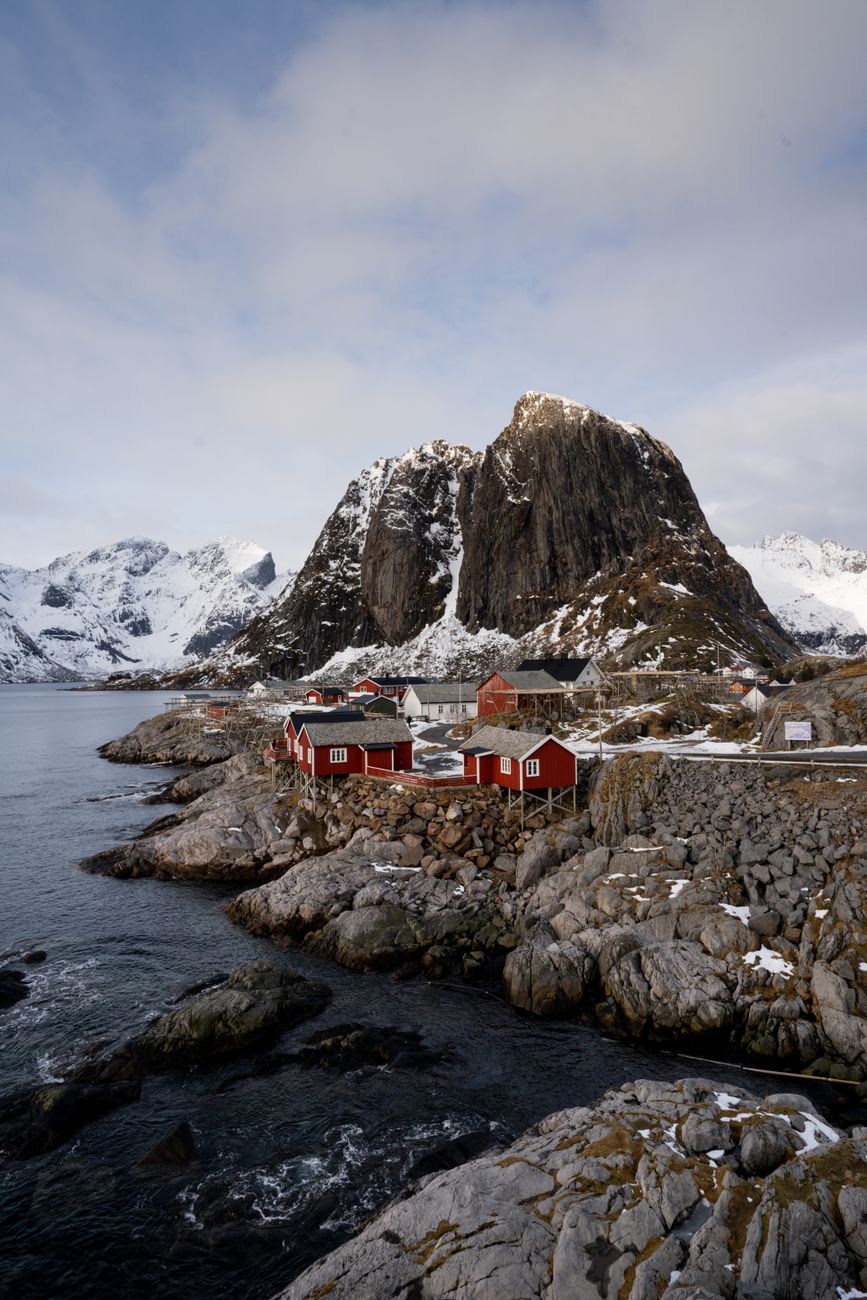
To arrive in the Lofoten archipelago during the deep winter months is to enter a world pared down to its rawest architectural elements: jagged granite mountains jutting directly from freezing arctic seas, timber rorbuer fishing cabins perched on stilts over dark water, and the hypnotic cadence of coastal storms.
The Rhythm of Polar Blue
Between late November and mid-January, the sun never physically ascends above the horizon. Instead, travelers are treated to what Scandinavians celebrate as the ‘blue hour’—a persistent, surreal twilight lasting four to five hours daily, where snowfields gleam with incandescent indigo and seafoam glows silver.
“In Lofoten, daylight is not an absolute state, but a delicate gradient that demands patience and quiet contemplation.”
We stayed in Reine, a historic fishing outpost where local maritime families have dried skrei cod on wooden drying racks for over a millennium. Here, tourism has not erased authenticity; instead, visitors sleep beneath hand-hewn spruce beams while storm gales rattle the panes outside, cradled by sheepskin throws and wood-burning hearths.
Mindful Travel Logistics
Exploring this sensitive subarctic landscape requires intentionality. Roads are coated with mirror ice, demanding studded tires and respectful, unhurried transit. We recommend lingering in a single village for at least six days rather than darting along the E10 highway.
- Recommended Base: Hamnøy or Reine for architectural heritage and sea vistas.
- Gear: Dual-layer merino wool, windproof alpine shells, and ice cleats.
- Cultural Consideration: Respect working fishing piers and private drying racks.